Polar N₂O
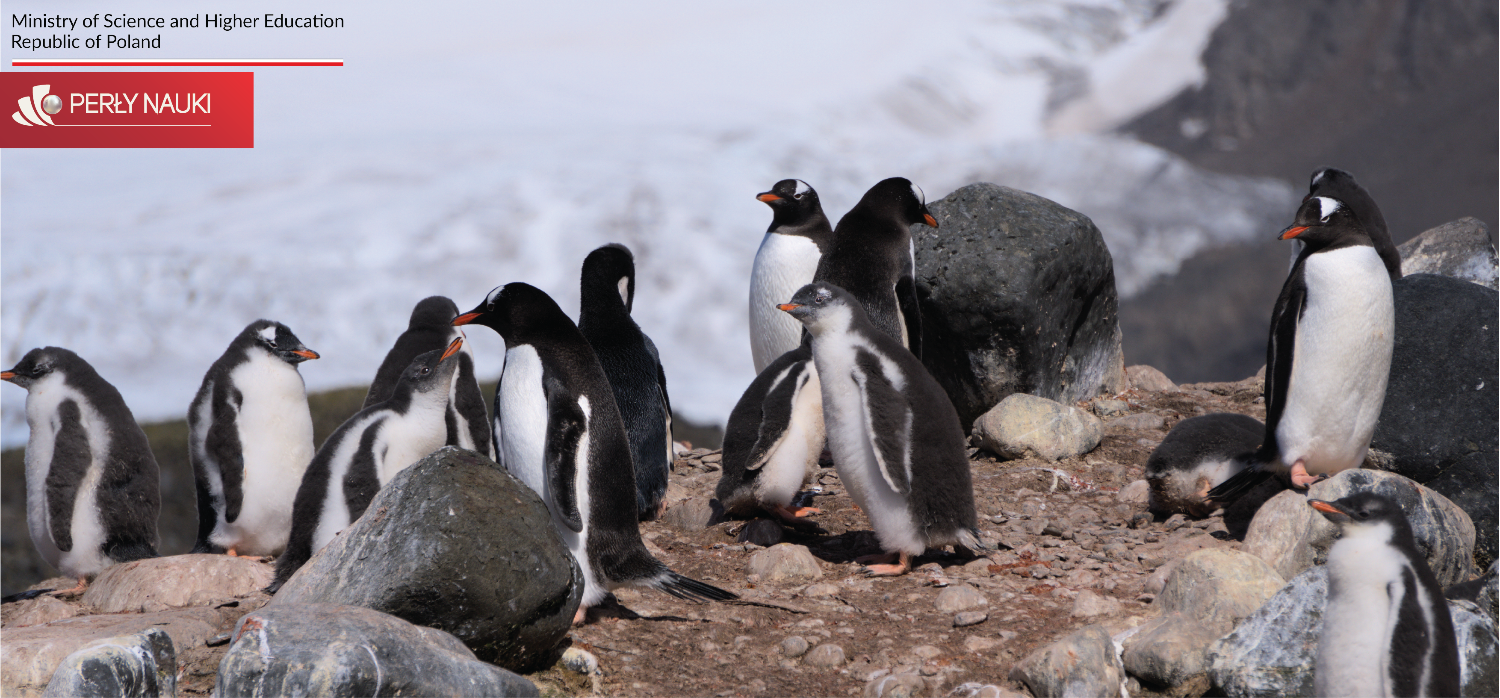 Gentoo penguin colony on King George Island (South Shetland Islands, Antarctica).
Mechanisms of microbiological emission of a potent greenhouse gas - N₂O in polar regions
Project manager (PI): Julia Brzykcy
Project description:
Polar soils are particularly strongly affected by climate warming. Increased temperatures and the input of organic matter from thawing permafrost, lead to an increase in microbial metabolic activity and organic matter degradation, amplifying the greenhouse effect through the production of greenhouse gases: carbon dioxide (CO₂), methane (CH₄), and nitrous oxide (N₂O).
While the mechanisms of CO₂ and CH₄ emissions are relatively well understood, much less is known about N₂O emissions, which have 300 times greater 100-year global warming potential than CO₂ and are also a major contributor to the depletion of the ozone layer. Recent studies indicate that N₂O emissions from polar soils (affected by thawing permafrost and cryoturbation) are among the highest emissions detected from natural sources and could contribute significantly to the global N₂O budget. Additionally, high emissions are observed near animal colonies, while low or even negative emissions are found in polar deserts.
The aim of the project is to investigate the mechanisms leading to N₂O emissions in polar regions, including the role of soil microorganisms and their integration into the nitrogen cycle.
Project team
Project collaborators @ UiT:
Andrea Söllinger
International collaborators:
Institute of Biochemistry and Biophysics, Polish Academy of Sciences, Poland: Jakub Grzesiak (project supervisor)
University of Warsaw, Poland: Renata Matlakowska
Agricultural University of Iceland, Iceland: Bjarni D. Sigurdsson
Dissemination & public outreach:
Pint of Science Festival 2025, Tromsø. "Digging into the soil warming: how microbes can influence our climate" presented by Julia Brzykcy
Financial/grant information:
The project is funded by state budget resources granted by the Minister of Science under the "Pearls of Science II" program (Poland).
******
Contact: Julia Brzykcy (julia.brzykcy@uit.no)
Last updated, June 2026